
What I’m Creating and Why
For most of my nearly twenty years in education, I have created, adapted, and sometimes completely reimagined curriculum to meet the needs of the students in front of me. I am sure other special education teachers know what I’m talking about here. If you are lucky enough to be given a curriculum to use at all, you may soon discover that you have to recreate most of it. Sometimes, it is simply easier to put it in the cupboard and start over.
So now, I am bringing that experience together to develop something I have wanted to create for a long time: a flexible, nature-based curriculum designed with neurodivergent children in mind.
This curriculum began with a question I have asked throughout my career:
How can we maintain meaningful learning goals while giving children different ways to reach them and helping them create healthy connections to the Earth and its energy that are often missing in today’s world?
Children do not arrive at a lesson with the same academic skills, communication abilities, sensory needs, attention, or emotional readiness. Even the same child may need something different from one day to the next. A task that feels manageable one morning may feel overwhelming on another.
That does not mean the child is incapable of learning. It means the pathway may need to change.
Creating More Than One Path to Learning
The curriculum I am designing uses three flexible learning pathways. Each pathway works toward the same central concept, but the reading level, amount of writing, type of response, and degree of independence may differ.
A child might use one pathway for reading, another for mathematics, and a different one on a day when regulation, communication, or concentration is more difficult.
These pathways are not labels, and they are not intended to place children into fixed ability groups. They are tools that allow parents and educators to respond to the learner in front of them.
The goal is to provide an appropriate level of challenge without pushing a child into frustration or dysregulation.
Why Nature-Based Learning?

A single topic can naturally bring together reading, writing, mathematics, science, history, movement, art, and hands-on investigation. This makes learning feel connected rather than divided into unrelated subjects.
Because nature looks different depending on where a child lives, I want the curriculum to be adaptable rather than tied to one particular landscape or climate. A field, park, woodland, desert, beach, garden, backyard, or even a small patch of grass can become a place for learning.
As the curriculum develops, I hope to account for different climates, seasons, ecosystems, and types of organic matter. Whenever possible, lessons will invite children to explore the plants, animals, soil, water, weather, and other natural features found in their own surroundings. Activities will be written broadly enough to remain meaningful whether a child is learning in Washington, Scotland, Arizona, or somewhere entirely different.
The curriculum is currently being developed as a project-based program for kindergarten through second grade. Concepts will spiral and grow across this three-year span so children can revisit important ideas with increasing depth and independence. Although K–2 is my starting point, I hope to expand the curriculum into additional grade levels as the project grows.
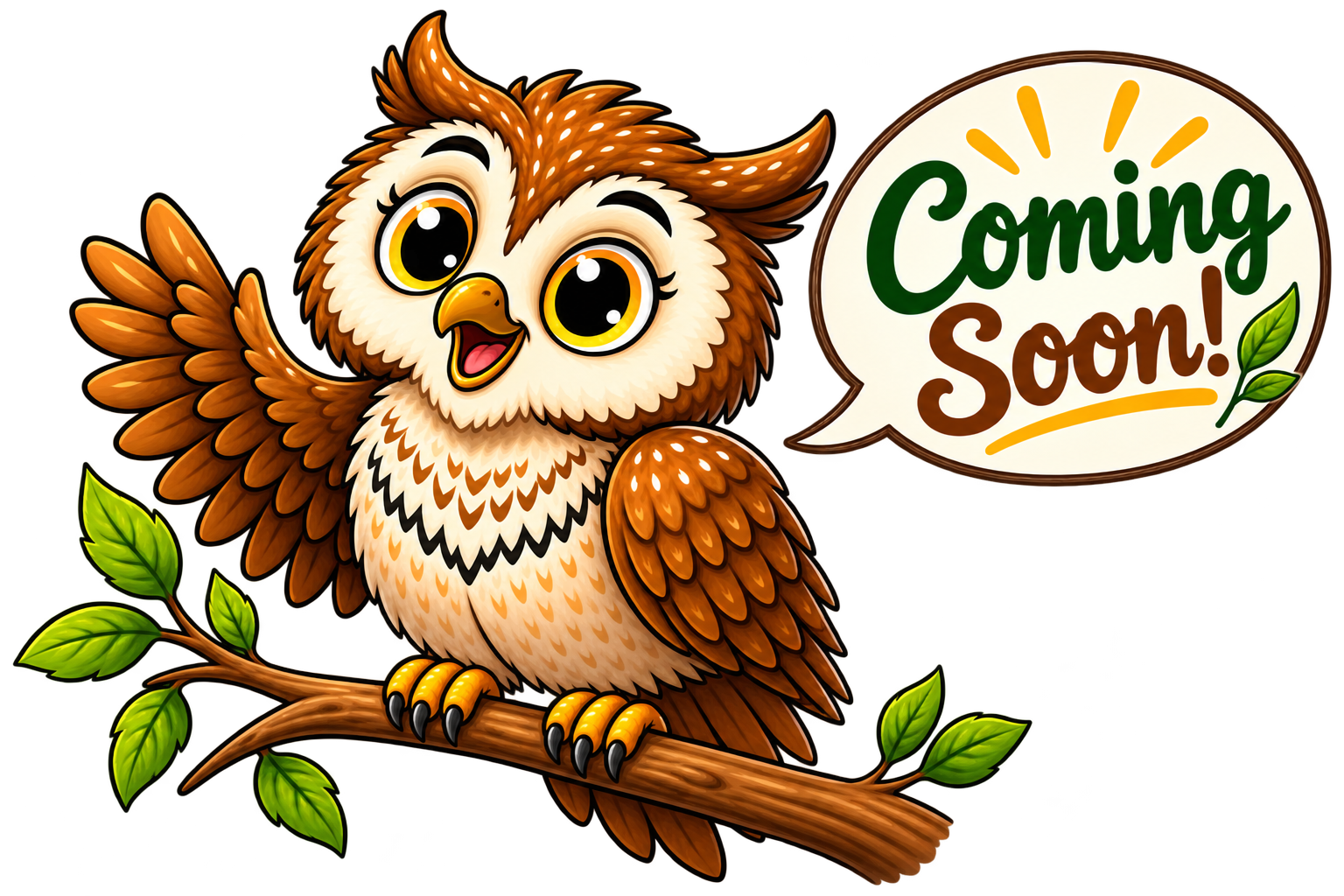
The first unit introduces living and non-living things with the help of Ollie, a curious owl who guides children through stories, questions, activities, movement, mathematics, creative projects, and exploration of the natural world around them.
Designed With Neurodivergent Learners in Mind
Many traditional materials expect the child to adjust to the curriculum. I am working from the opposite direction by asking how the curriculum can become more accessible to the child while preserving meaningful expectations.
That includes considering:
- Clear and predictable page layouts
- Reduced visual clutter
- Support for beginning and developing readers
- Multiple ways to respond and demonstrate understanding
- Movement and hands-on learning
- Visual supports and child-friendly directions
- Opportunities for both supported and independent work
- Flexible pacing
- Emotional and sensory readiness
- Opportunities to explore the learner’s own natural surroundings
- Practical guidance for the adult supporting the child
This curriculum is informed by my experience in general education, special education, intervention, curriculum development, psychology, and supporting children with a wide range of learning, communication, behavioural, sensory, and emotional needs.
I believe behaviour is communication. I believe regulation supports learning. I believe children need opportunities to connect with the Earth and understand the natural world around them. Most importantly, I believe every child is capable of learning when we provide the right support, environment, and pathway.
A Work in Progress
This is not a finished curriculum or a formal launch. It is a look behind the scenes at what I am creating and why I believe it matters.
I am currently developing the learning progression, aligning lessons with educational standards, creating student materials, writing parent and teacher guidance, and evaluating how each activity can be made accessible without losing its purpose or depth.
I am also considering how lessons can remain relevant across different climates, environments, and communities while leaving room for families and educators to connect each concept to the natural spaces available to them.
I will continue updating the curriculum section of my website as both the curriculum and my design process develop. I will also share selected samples, reflections, and glimpses of Ollie along the way.

Would Love to Hear From You
As I move forward, I would love to hear from educators, parents, caregivers, specialists, and others who have experience with neurodivergent learners or nature-based education.
As I move forward, I would love to hear from educators, parents, caregivers, specialists, and others who have experience with neurodivergent learners or nature-based education.
What has worked well for the children you support? What challenges have you encountered? What do you wish existing curricula understood or included? I would also be interested in hearing how your local climate, landscape, plants, animals, and available outdoor spaces influence learning where you live.
Please share your ideas, experiences, and questions in the comments. Your perspectives can help me consider needs and possibilities beyond my own experience as I work to make this curriculum as thoughtful, adaptable, and comprehensive as possible.
Follow the project and learn more at ChristlesWritersNook.com/curriculum.

Learn More and Follow Along
Follow my work as an educator, curriculum developer, and author. I’ll continue sharing curriculum updates, reflections, resources, and glimpses behind the creative process.
Leave a Reply